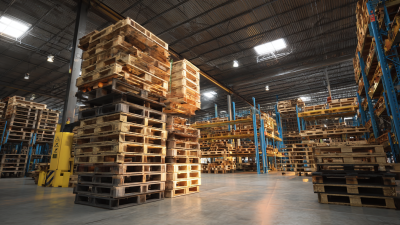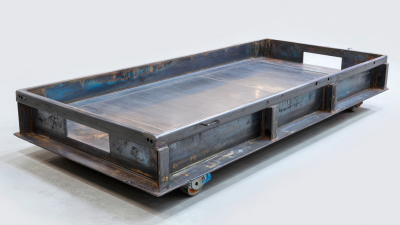
So, why go for a Welding Palletwhen it comes to global shipping? Well, it all starts with control—not just how it looks. Basically, a Welding Pallet is built with welded steel joints that create a super sturdy platform for heavy machinery, fabricated parts, and all sorts of industrial stuff. That tough, rigid frame helps keep everything stable, even when forklifts are moving it around, it’s being transferred at ports, or even during those long ocean trips. Honestly, that’s pretty crucial because one loose component can end up ruining the whole shipment, and nobody wants that mess.
Daniel Mercer, an international packaging engineer at Meridian Load Systems, puts it pretty simply: “Reliable shipping starts with load stability, not just stronger steel.” He’s onto something—having a well-designed Welding Pallet means it can take repeated use, keeps warehouse operations consistent, and even cuts down on disposable packaging waste. Plus, you can customize it with different dimensions, reinforced corners, lifting pockets, or tie-down points—especially handy for those odd-shaped or heavy loads often squeezed into tight containers or stacked in busy distribution yards.
That said, steel isn’t always the magic answer. If welds are shoddy, load calculations are off, or corrosion protection is lacking, you might actually cause more problems. That’s why experience is key here. Engineers need to check the cargo’s center of gravity, working load limits, stacking methods, and what kind of handling equipment will be used before the thing gets built. And don’t forget, international shipments require extra attention: carrier rules, destination requirements, labeling, and safe lifting practices all play a role. You can’t just assume one design works everywhere.
Sometimes, pallets can be overbuilt—which ends up costing more than it should. Nobody wants to throw money away on unnecessary strength. A good supplier will provide detailed inspection records, material info, dimensional drawings, and clear guidelines for maintenance. The most effective Welding Pallet strikes a fine balance between strength, weight, repairability, and overall shipping costs. Yep, it might not look flashy, but its real power lies in how it performs—standing up to vibration, moisture, and repeated handling, with every joint tested. That quiet, dependable performance? That’s often the real reason folks pick it over flashier options.
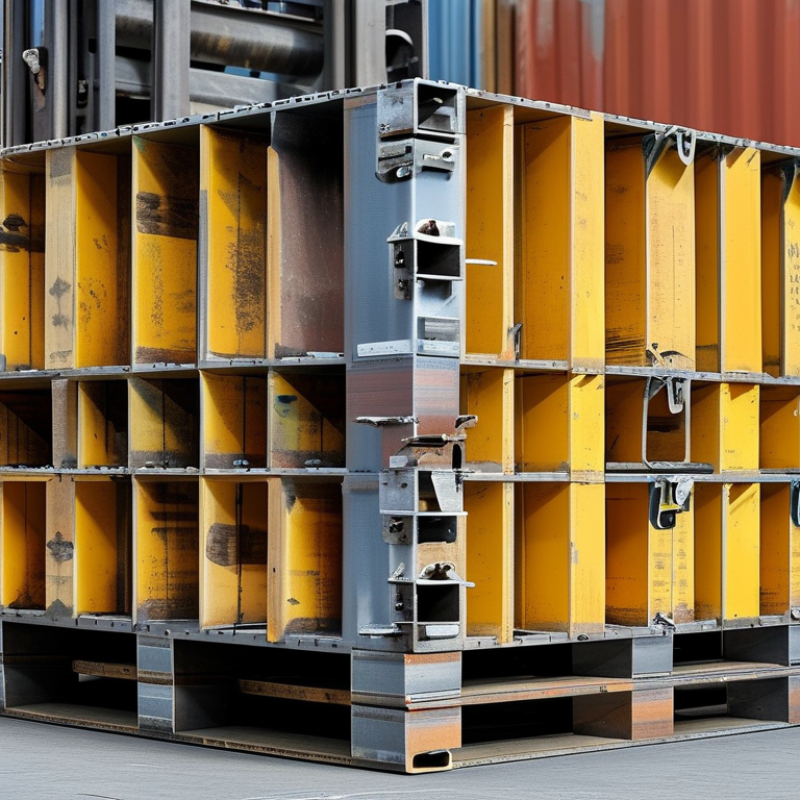
Why Choose a Welding Pallet for Global Shipping?
Welded steel pallets use connected steel tubes, channels, or formed sheets to create a rigid load platform. Their structure resists twisting when forklifts lift uneven cartons. A Pallet Flat design also supports stable stacking inside containers and trailers. Common materials include mild steel, galvanized steel, and stainless steel. Mild steel suits general industrial freight, while galvanized surfaces handle damp storage better. Stainless steel works where corrosion control is especially important.
In warehouse inspections, weld quality often matters more than appearance. Check the joints, deck supports, fork openings, and corner alignment before loading. A poorly finished weld can catch packaging or create a sharp contact point. This risk is easy to miss. Steel pallets also tolerate repeated handling, heavy machinery parts, and temperature changes better than many disposable alternatives. Yet they are heavier, and that extra tare weight can affect shipping costs. The trade-off deserves calculation.
Tips: Measure the pallet against container dimensions before production. Confirm safe working load, stacking limits, and fork-entry clearance. Ask for coating thickness or material details when moisture is expected. Clean exposed surfaces after use, because small rust spots can spread under trapped water. Do not assume every welded pallet performs equally; design drawings and load testing provide more reliable evidence.
A welding pallet becomes valuable when cargo must survive repeated handling, vibration, and long-distance transport. ISO 6780 identifies two widely used footprints: 1,200×800 mm and 1,000×1,200 mm. The 1,200×800 mm footprint suits many European warehouse layouts and narrow loading zones. The 1,000×1,200 mm format offers greater depth for heavier machinery and wider cartons.
UNCTAD’s Review of Maritime Transport reports that over 80% of global merchandise trade moves by sea. A stable pallet footprint can reduce empty space, shifting loads, and handling damage during these journeys. The World Bank’s 2023 Logistics Performance Index assessed 139 economies, emphasizing reliability, tracking, and delivery timeliness. A consistent pallet base supports all three operational goals.
In practice, a welded Flat Pallet with accurate outer dimensions gives forklifts predictable entry points. Reinforced feet can prevent distortion when steel parts are stacked several layers high.
Drainage gaps also help after rain exposure at ports or outdoor storage areas. The fit is not perfect. Packaging tolerances, container walls, and forklift clearances still require checking.
A practical trial should measure loaded height, fork spacing, and tie-down access. Engineers sometimes overlook the last detail. A pallet may meet ISO 6780 footprints yet remain awkward to secure. Designing around both 1,200×800 and 1,000×1,200 mm options can improve compatibility, but only after real cargo testing.
A welding pallet is valuable when repeated handling demands predictable strength. Its joined steel sections can resist impacts from forklifts, conveyors, and loading equipment. For international shipping, that consistency matters across changing warehouses and climates. A Pallet Mould can support repeatable component dimensions before welding, but final quality still depends on weld penetration, alignment, and inspection.
ISO 8611 testing examines how a pallet performs under different working conditions. Static load testing applies controlled weight while measuring deflection and permanent deformation. Dynamic testing represents handling forces, such as lifting and moving a loaded pallet. Racking tests place the pallet on supports, exposing weak areas between contact points. Small details matter. A one-millimeter distortion can change support contact. Test loads should reflect the intended load pattern, not an unrealistic block.
In practical reviews, I look beyond the highest reported capacity. I check load distribution, fork entry, weld consistency, and corrosion protection. The declared capacity should separate static, dynamic, and racking values clearly. One number cannot describe every warehouse. Real floors are uneven, loads shift, and operators make mistakes. That is the uncomfortable part. ISO 8611 results improve confidence, but they do not replace site trials or maintenance checks. A better specification records test conditions, support spacing, load placement, and observed damage. This evidence helps buyers compare welding pallets responsibly for export crates, storage systems, and repeated handling.
International shipments often use wooden pallets, which can carry insects in untreated timber. ISPM 15 addresses this risk through approved heat treatment, fumigation, and official marking requirements. A welded steel pallet does not fall within this wood-packaging scope. It contains no solid wood components that require ISPM 15 treatment.
That difference can simplify export preparation. Steel pallets can move through ports without waiting for wood treatment or checking treatment marks. Their welded frames also provide stable support for heavy machinery, metal parts, and boxed goods. Smooth lifting points help forklifts handle loads with less shifting. Stronger edges matter during container loading.
Less paperwork helps.
However, steel is not automatically the better choice. Its higher weight may increase transport costs, especially on long routes. Exposed steel can also corrode in humid storage areas without suitable protection. Pallet dimensions, load capacity, stacking design, and surface coating still need careful review. A poorly designed pallet creates problems even when ISPM 15 does not apply.
Some destinations may impose separate packaging, safety, or customs requirements. Export teams should confirm these rules before dispatch. In practice, the best choice depends on cargo weight, moisture exposure, handling equipment, and return logistics. Steel avoids wood-treatment obligations, but it does not remove the need for shipment planning.
A welded steel pallet can provide stable support during long-distance transport. Its value depends on container compatibility, not strength alone. ISO 668 defines standard container dimensions and classifications. Common units include 20-foot and 40-foot containers. Their external width is typically about 2.44 meters. Internal clearance is smaller, and usable space varies. Door openings can also restrict loading. A pallet that fits the floor may not pass through the doors.
Measure before fabrication. Check the pallet’s length, width, height, and loaded weight. Include the product, braces, straps, and protective materials. A few extra millimeters can create trouble. I have seen designs fit on paper but fail during forklift entry. It is an easy mistake. Leave practical clearance around walls, doors, and corner posts. Confirm the container’s internal dimensions with the shipping provider, not only a general table.
Welded pallets should support safe forklift and lifting access. Fork pockets must align with equipment used at the origin and destination. The base should distribute weight across the container floor. Uneven loading may damage both cargo and flooring. Corrosion protection also matters when containers face humidity and temperature changes. However, heavier steel can reduce payload capacity. This trade-off deserves review. A prototype load test can reveal weak welds, awkward handling points, or wasted space. ISO 668 offers a dimensional framework, but real shipping conditions still require careful verification.
A welded pallet supports safer global shipping when handling conditions are controlled. Its rigid frame resists twisting during forklift movement and container loading. Operators should confirm that fork tines enter fully before lifting. Partial entry can shift the center of gravity. That small error can damage goods or injure nearby workers. Check the pallet’s rated capacity, weld quality, and deck condition before every use. Pallet Molds can help create consistent dimensions, but production checks still matter.
Rack storage requires more than a strong-looking frame. Confirm that each pallet suits the rack beam spacing and support method. The load must remain centered between beams. Heavy items should sit low, with no loose edges extending into travel paths. Uneven weight can bend components over time. It may also create a falling-load hazard. Use clear identification for empty weight, working load, and inspection status. Requirements can vary across facilities and destinations, so verify handling procedures with qualified engineers and warehouse supervisors.
Tips: Keep fork pockets visible and unobstructed. Secure tall or shifting loads with suitable restraints. Never exceed the lowest rated component. Inspect welds for cracks, distortion, and corrosion. A practical lesson is easy to miss: a pallet may pass a visual check yet fail under uneven loading. Recheck it after rough handling, not only after scheduled inspections.
Why Choose a Welding Pallet for Global Shipping?
Lifecycle Value: Durability, Repairability, and Steel Recycling Potential
A welded steel pallet can survive repeated loading, dragging, and container handling. In practical warehouse work, damaged corners are often repairable. A technician can straighten a rail, replace a foot, or weld a cracked joint. This avoids discarding the entire platform. Small repairs matter. Inspection records should track cracks, corrosion, distortion, and maximum load changes. That discipline is not always consistent. It should be.
The economics improve when service life extends across many shipping cycles. Steel also offers a strong recovery pathway at end of use. The Bureau of International Recycling reported approximately 630 million tonnes of recycled steel production in 2022. The World Steel Association states that steel can be recycled repeatedly without losing its essential properties. It also reports that recycling one tonne of steel can save about 1.4 tonnes of iron ore, 0.8 tonnes of coal, and 0.3 tonnes of limestone. These figures support steel’s circular value, but recovery is not automatic. Mixed materials, heavy coatings, and poor collection records can reduce recycling efficiency. A pallet is not immortal. Yet, with documented repairs, controlled maintenance, and clear material separation, its lifecycle value can exceed the initial purchase price.
The following figures are indicative engineering ranges for reusable welded steel pallets. Actual results depend on pallet design, steel grade, load distribution, corrosion protection, handling equipment, route conditions, and maintenance practices.
| Lifecycle Dimension | Indicative Data | What the Data Means | Global Shipping Relevance | Practical Qualification |
|---|---|---|---|---|
| Typical service life | 10–20 years | A welded steel pallet can remain in service for many years when structural damage and corrosion are controlled. | Long service life can spread the manufacturing impact over repeated international shipping cycles. | Life expectancy varies with impact frequency, outdoor exposure, sanitation requirements, and load conditions. |
| Potential reuse cycles | 100–500+ cycles | Repeated reuse is feasible because steel does not absorb moisture and is less vulnerable to splitting than many wooden pallet designs. | Higher reuse reduces the need to purchase and dispose of a new load carrier for every shipment. | This is an indicative range, not a guaranteed rating; testing should reflect the intended load and handling system. |
| Dynamic load capacity | Approximately 1,000–2,000 kg | Many industrial welded steel pallets are designed for substantial loads while being moved by forklifts or pallet trucks. | Suitable capacity can support dense cargo configurations and reduce the number of pallets required per shipment. | Capacity must be confirmed by the manufacturer or a qualified engineer for the specific pallet geometry. |
| Static load capacity | Approximately 2,000–4,000 kg | Static capacity is generally higher than dynamic capacity because the pallet is not experiencing movement or impact. | Supports stable warehouse stacking when the floor, racking system, and load center are suitable. | Never use static capacity as a substitute for a certified racking or transport rating. |
| Repairability | High | Damaged feet, runners, deck sections, or localized welds may often be straightened, rewelded, or replaced. | Repair can keep assets in the shipping pool and reduce replacement purchases and reverse-logistics waste. | Repairs should be performed by competent personnel and followed by inspection before reuse. |
| Repair-to-replacement economics | Often 15–40% of replacement cost for localized damage | Minor structural repairs can be economically preferable to replacing the complete pallet. | Lower repair expenditure can improve total cost of ownership across long-distance, multi-leg routes. | The ratio depends on labor rates, spare parts, coating requirements, and the extent of deformation. |
| Resistance to moisture and pests | Non-absorbent and pest-resistant | Steel does not provide a food source for insects and does not absorb water like untreated wood. | Can simplify use in humid routes and reduce concerns associated with pest-related treatment requirements. | Corrosion protection remains necessary in salt air, standing water, and highly humid environments. |
| Steel material content | Typically 90–98% of pallet mass | Most of the pallet’s weight is commonly made up of ferrous steel, with smaller amounts of coatings, fasteners, or plastic components. | High steel content makes material separation and recovery relatively straightforward at end of life. | The exact percentage depends on the design, surface treatment, labels, and attached accessories. |
| Steel recycling potential | Approximately 95–100% of steel content is technically recyclable | Steel can be recovered and remelted into new steel products without losing its basic material properties. | End-of-life recovery can reduce landfill disposal and preserve the value of the metal material. | Actual recycling depends on collection, sorting, local scrap infrastructure, and contamination levels. |
| End-of-life recovery route | Scrap collection → sorting → shredding or preparation → electric-arc or integrated steelmaking | Worn pallets can enter established ferrous-metal recycling systems rather than being treated as mixed waste. | Clear material recovery routes can support sustainability reporting and circular procurement policies. | Remove non-steel attachments where practical and follow local waste regulations. |
| Dimensional stability | High when properly designed | Welded steel frames generally retain their geometry better than materials that can swell, split, or absorb moisture. | Consistent dimensions help with automated handling, container loading, warehouse slots, and returnable-packaging systems. | Repeated forklift impacts can still cause distortion, especially at entry points and corner members. |
| Maintenance requirement | Periodic inspection; repair as needed | Routine checks can identify bent members, cracked welds, corrosion, missing feet, or unsafe deck conditions. | Planned maintenance helps prevent shipment disruption and extends the usable life of the pallet pool. | Inspection frequency should be based on use intensity, route risk, and internal safety procedures. |
| Lifecycle value indicator | Best when reuse and return logistics are well managed | The economic and environmental advantage increases as the pallet completes more trips and remains in circulation. | Global networks benefit most when pallets are tracked, returned, repaired, and redeployed rather than lost or discarded. | Purchase price alone does not represent total lifecycle cost or material value. |
Note: Load ratings, service-life estimates, repair procedures, and recycling outcomes should be validated against the pallet’s engineering drawings, applicable handling standards, local regulations, and site-specific operating conditions.
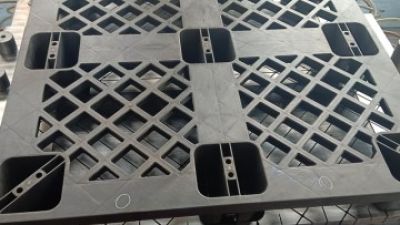
China factory 9-runner Plastic Pallet Moulds are developed for producing durable injection-molded logistics pallets with consistent quality and efficient cycle performance. Designed for large-scale manufacturing, these moulds support the production of grid-type pallets made from high-density polyethylene (HDPE) or polypropylene (PP). Their precise cavity structure helps create stable dimensions, smooth surfaces, and reliable runner balance, making each pallet suitable for demanding material-handling environments.
The finished pallets feature an open-grid design reinforced with interlocking ribs. This structure distributes loads effectively while reducing overall weight, allowing easier forklift handling, racking, stacking, and warehouse movement. The nine-runner configuration can contribute to more uniform material flow throughout the mould, helping improve moulding efficiency and reduce inconsistencies during repeated production. Strong mould construction and carefully engineered support sections also help extend service life under continuous factory use.
Suitable for logistics centers, warehouses, manufacturing facilities, and distribution operations, these injection-Molded Pallets offer a practical combination of strength, lightness, and durability. Their reusable HDPE or PP construction resists moisture, impact, and routine handling wear, while the reinforced grid profile supports dependable performance in different storage and transportation applications. With professional mould manufacturing and strict quality control, the production process can deliver reliable pallets tailored to modern logistics requirements.
: It is a rigid platform made from welded tubes, channels, or formed steel sheets. The structure resists twisting during uneven forklift lifting. It supports stable stacking in containers and trailers.
Mild steel fits general industrial freight and indoor storage. Galvanized steel handles damp conditions more effectively. Stainless steel suits areas requiring stronger corrosion control. Material choice still needs practical evaluation.
Inspect weld joints, deck supports, fork openings, and corner alignment. Look for cracks, sharp edges, loose parts, and distorted rails. A rough weld may catch packaging. Appearance alone is not enough.
Measure the pallet against container and trailer dimensions before production. Check fork-entry clearance and stacking height. A few extra centimeters can reduce usable space. This detail is easy to overlook.
Confirm the safe working load and stacking limit. Ask whether testing used evenly distributed or uneven loads. Design drawings provide useful evidence. Load testing is better.
Yes. Steel pallets are usually heavier than disposable alternatives. Their extra tare weight can increase transport costs. Compare purchase price, durability, handling, and freight expenses together. The cheapest unit may not win.
Many damaged corners, feet, rails, and joints can be repaired. Technicians may straighten a rail or replace a foot. Record cracks, corrosion, distortion, and changed load limits. Maintenance records are often inconsistent.
Steel can be recycled repeatedly without losing its essential properties. Separate mixed materials and control heavy coatings where possible. Keep collection and repair records. Recovery is not automatic.
Remove trapped water and clean exposed surfaces after use. Small rust spots can spread beneath moisture. Inspect frequently in damp storage areas. Neglect happens. It costs later.
A Welding Pallet is a durable steel platform designed for reliable handling, storage, and global shipping. Its welded structure provides strength and stability, while common ISO 6780 footprints, including 1,200×800 mm and 1,000×1,200 mm, support compatibility with international logistics systems. Performance can be evaluated through ISO 8611 testing for static, dynamic, and racking loads, helping users select a pallet that matches specific weight and handling requirements.
Steel pallets also avoid the wood-treatment requirements associated with ISPM 15, making cross-border shipping more straightforward. When paired correctly with ISO 668 container dimensions, they can support efficient space utilization and secure cargo placement. Safe operation still depends on proper forklift access, rack compatibility, balanced load distribution, and careful inspection. Over the long term, their durability, repairability, and recyclability can reduce replacement needs and improve lifecycle value for industrial supply chains.