When global buyers are selecting a Cable Tie Mould, they rarely base their decision solely on how many cavities it has. Instead, they look at things like cycle times, the quality of the steel, how well the cooling is balanced, ejection stability, and how easy it is to maintain over the long haul. Sure, a twelve-cavity mould might seem really tempting, but if it doesn’t fill properly, you could end up with uneven straps, weak locking heads, or way too much flash—those small details really do count.
Daniel Mercer, an injection moulding consultant with over twenty years of experience, puts it pretty plainly: "Reliable mould performance starts with a balanced design, not just impressive numbers." That practical insight underpins the whole idea behind our Top 10 Types of Cable Tie Mould for Global Buyers. We dive into everything from single-cavity and multi-cavity moulds to family, cold-runner, hot-runner, stack, insert, prototype, high-speed, and custom solutions.
Every type fits different production needs. For example, standard nylon cable ties need stable cooling and tight cavity dimensions. If you're working with recycled or glass-filled materials, you’ll probably need tougher steel, better venting, and smarter gate designs. Some moulds are built to be cheap and simple, while others are meant for millions of consistent parts. It’s all about what your project demands.
Honestly, choosing the right mould isn’t always straightforward—that’s the tricky part. Buyers should really take the time to review sample parts, mould-flow simulations, maintenance histories, and the experience level of their suppliers before they commit. A glossy brochure can look great, but it’s no substitute for the real evidence of quality.
And here’s a tough truth: no mould design is perfect for every material, machine, or factory situation. Regional support, spare parts, and operator training are just as crucial as the design itself. These ten categories serve as a practical way to compare different options, but at the end of the day, testing, revisions, and honest technical discussions are key to making the right choice.
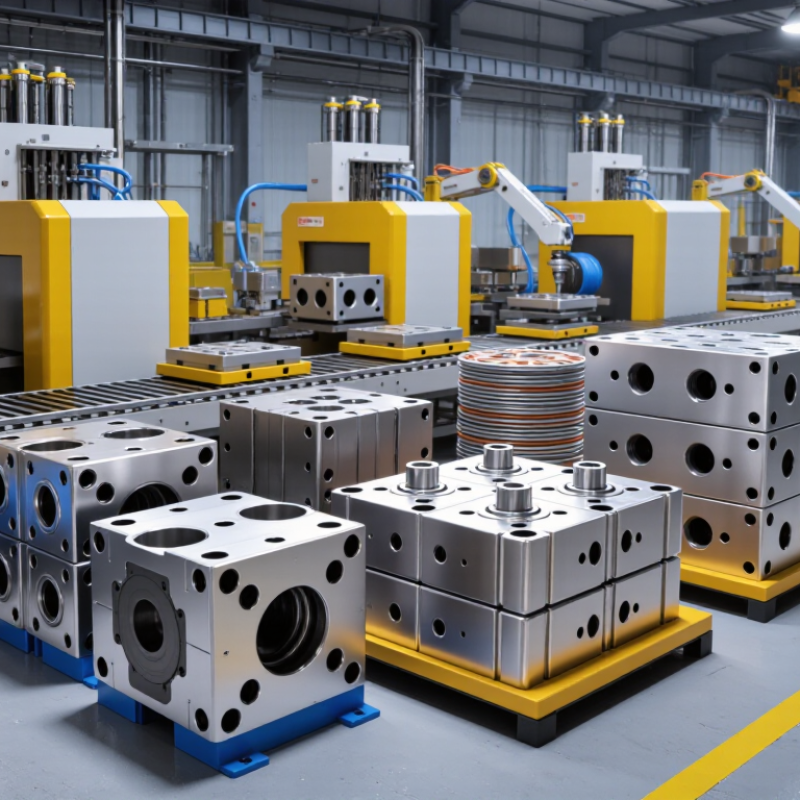
A Cable Tie Mold shapes molten polymer into narrow straps, locking heads, and flexible tails. Its design controls strength, surface finish, cycle time, and material waste. Most tools use hardened steel inserts because repeated injection pressure can damage softer surfaces. The cavity must reproduce small teeth without creating sharp flash.
The manufacturing process begins with a measured 3D model and steel selection. Engineers then machine cavities, runners, gates, cooling channels, and ejector openings. Balanced gates help fill each cavity evenly. Cooling channels should follow the part layout closely, but drilling space is often limited. This is where practical judgment matters. A perfect simulation cannot predict every production problem.
Polyamide absorbs moisture, so operators usually dry the resin before molding. Incorrect drying can cause bubbles, brittleness, or inconsistent tooth engagement. Mold temperature, injection speed, and holding pressure need controlled trials. The first samples may reveal drag marks near the head or slight warping along the strap. These defects are useful evidence, not just failures. A technician may polish one area, adjust vent depth, or change cooling flow. Small changes can affect dozens of cavities. For global buyers, inspection records should include cavity dimensions, cycle results, ejection performance, and sample testing under repeated bending. Some assumptions still require review. A mold that performs well in one factory may need different settings elsewhere.
Cable Tie Mould Basics and Manufacturing Principles
This chart compares common cable tie mould configurations by typical cavity-count range. Higher cavity counts can improve output, while hot-runner, stack, and high-speed thin-wall designs require more complex tooling, cooling, and process control. Values are engineering reference ranges and vary with tie size, resin, machine capacity, and mould layout.
Cable tie mould designs are commonly classified by cavity layout, runner system, tie geometry, and automation level.
For global buyers, the practical “top 10” include:
single-cavity multi-cavity family hot-runner cold-runner stack insert interchangeable high-speed fully automated moulds
Each type solves a different production problem.
Single-cavity moulds suit prototypes and small orders.
Multi-cavity designs improve output and reduce labour per piece.
A family mould produces different tie sizes, but filling balance can become difficult.
Hot-runner systems reduce material waste.
Cold-runner moulds usually cost less and simplify maintenance.
Stack moulds increase output within limited machine space.
Insert moulds support special locking heads or reinforced sections.
Interchangeable designs help buyers adjust tie length without rebuilding the entire tool.
PlasticsEurope reported 413.8 million tonnes of global plastics production in 2023. This scale increases pressure for efficient moulding and lower scrap rates. Industry investment reports also forecast steady growth in injection moulding equipment through the next decade. That supports demand for precise, automated tooling.
A Cable Tie Injection Molding Machine should match the mould’s cavity count, cycle time, and ejection method.
Small details matter.
Poor gate placement may leave marks near the locking head.
Excessive cooling variation can bend long ties.
A perfect mould rarely exists.
Experienced buyers still review trial data, material shrinkage, and maintenance access before approval.
Some designs look efficient on paper, yet perform poorly during continuous production.
Top 10 Types of Cable Tie Mould for Global Buyers
Cable tie mould selection should follow the application, resin, and expected output. Grand View Research estimates the global cable ties market will grow at about 6% annually through 2030. That growth increases pressure on cavity balance and cycle stability. For basic electrical bundling, single-cavity moulds offer simple trials and lower tooling risk. Multi-cavity moulds suit high-volume nylon ties. Family moulds can produce matching sizes, but filling balance needs careful validation. Stack moulds increase output without expanding the machine footprint. They are useful for continuous factory production.
Hot-runner moulds reduce runner waste and support stable cycle times. Cold-runner moulds remain practical for lower volumes and easier maintenance. Insert moulds fit cable ties with metal clips or mounting parts. Overmolding moulds combine rigid nylon with soft protective materials. Slide moulds create side openings, mounting features, or complex locking structures. Pot Mould terminology varies between suppliers, so buyers should confirm its cavity layout and intended application. It may suit compact, round components, but its value depends on the actual tie design.
MarketsandMarkets’ injection-molding analysis highlights automation, material efficiency, and higher cavity counts as important industry priorities. In practice, mold steel, gate position, cooling channels, and ejection force affect every batch. ISO 4892 testing can help assess polymer aging under light exposure. IEC 62275 also guides cable-tie performance for electrical installations. Small details matter. A cheaper mould may produce flash around the locking head. I would still request a full-flow analysis and sample measurement before approval.
| No. | Cable Tie Mould Type | Typical Application | Common Tie Material | Typical Tie Width | Closure or Mounting Design | Typical Production Configuration | Main Mould Features | Key Buyer Considerations |
|---|---|---|---|---|---|---|---|---|
| 1 | Standard Nylon Cable Tie Mould | General-purpose bundling in electrical panels, appliances, machinery and light industrial installations. | Nylon 6/6; heat-stabilized grades may be used for elevated-temperature applications. | Approximately 2.5–4.8 mm | One-piece strap with an integrated locking head and serrated strap. | Multi-cavity mould; cavity count depends on tie length, machine size and required output. | Balanced runner layout, wear-resistant inserts, accurate locking-head geometry and reliable demoulding. | Confirm tensile-strength requirements, operating temperature, UV exposure and the required tie lengths. |
| 2 | Heavy-Duty Cable Tie Mould | Large cable bundles, construction equipment, industrial machinery, outdoor infrastructure and heavy harnesses. | Reinforced nylon 6/6 or other engineering thermoplastics selected for higher mechanical loads. | Approximately 7.6–13 mm | Wider strap with a reinforced locking head and deeper teeth. | Lower cavity count is common because of the larger part size and higher injection volume. | High-strength core and cavity sections, robust ejection system and controlled filling of the thick head area. | Check minimum loop tensile strength, head strength, cooling time and mould rigidity. |
| 3 | Releasable Cable Tie Mould | Temporary installations, service loops, laboratory equipment, consumer electronics and frequently serviced wiring. | Nylon 6/6 or flexible engineering-grade nylon. | Approximately 2.5–4.8 mm | Reusable locking head with a thumb-release tab or release lever. | Multi-cavity mould with detailed slide or lifter features around the release mechanism. | Precise release-tab dimensions, smooth moving inserts and controlled parting-line alignment. | Evaluate release force, repeated-use durability, flash control and ease of one-hand operation. |
| 4 | Push-Mount Cable Tie Mould | Automotive wiring harnesses, control cabinets, appliances and panels where the bundle must be fixed to a pre-drilled hole. | Nylon 6/6; heat-stabilized or impact-modified grades may be specified. | Approximately 2.5–4.8 mm | Integrated fir-tree, arrowhead or push-rivet mounting base. | Multi-cavity mould with side-action or lifter details for the mounting base. | Accurate barb geometry, core alignment and controlled filling around the mounting feature. | Match the mounting base to hole diameter, panel thickness, retention force and installation direction. |
| 5 | Screw-Mount Cable Tie Mould | Electrical panels, machinery, telecommunications equipment and surfaces requiring a mechanically fastened tie base. | Nylon 6/6, often with a reinforced base section. | Approximately 2.5–4.8 mm | Integrated eyelet or saddle base designed for a screw or bolt. | Multi-cavity mould; removable inserts may be used for different hole or base configurations. | Concentric screw-hole geometry, reinforced mounting pad and strong demoulding support. | Verify screw size, hole tolerance, base flatness, pull-out strength and installation clearance. |
| 6 | Marker-Flag Cable Tie Mould | Wire identification, control panels, data cabinets, maintenance systems and complex harness assemblies. | Nylon 6/6 or printable engineering-grade nylon. | Approximately 2.5–4.8 mm | Integrated flat flag, writing panel or raised identification area. | Multi-cavity mould with a larger moulding area for the marker flag. | Flat, warp-resistant flag design, sharp edge definition and suitable surface texture for printing or marking. | Consider printable surface size, label visibility, orientation, flatness and resistance to cleaning chemicals. |
| 7 | Beaded Cable Tie Mould | Reusable bundling for household wiring, temporary cable management, retail packaging and light-duty service work. | Flexible nylon, polypropylene or another suitable thermoplastic. | Approximately 3–6 mm | Beaded strap that locks through a series of holes or slots and can be released for reuse. | Multi-cavity mould with close control of bead and slot dimensions. | Uniform bead spacing, smooth edges, flexible strap sections and reliable release from the mould. | Check the number of reuse cycles, flexibility at low temperature, locking security and strap thickness. |
| 8 | Parallel-Entry Cable Tie Mould | Applications requiring the strap to enter the locking head parallel to the bundle surface, including compact harnesses. | Nylon 6/6 or other engineering thermoplastic suitable for the working environment. | Approximately 2.5–4.8 mm | Side-entry or parallel-entry locking head that supports a low-profile bundle arrangement. | Multi-cavity mould with complex head and strap alignment details. | Accurate locking channel, controlled tooth engagement and improved handling of the low-profile head. | Assess bundle accessibility, minimum bend radius, head clearance and installer ergonomics. |
| 9 | Ladder-Style Cable Tie Mould | Large or adjustable bundles, reusable installations, temporary harnesses and applications requiring multiple locking positions. | Flexible nylon or other thermoplastic selected for repeated adjustment. | Approximately 4.8–9 mm | Multiple transverse openings or rungs that provide adjustable locking positions. | Medium- to multi-cavity mould with detailed openings and flexible-section control. | Consistent opening size, smooth internal edges, controlled flexibility and reliable ejection of the ladder section. | Check adjustment range, locking reliability, strap flexibility and resistance to tearing between openings. |
| 10 | Stainless-Steel Cable Tie Mould | High-temperature, chemical, fire-risk, marine and outdoor applications where polymer ties may be unsuitable. | The mould typically produces a polymer-coated or polymer-head component; the metal strap is formed by separate metal-processing equipment. | Common metal strap widths are approximately 4.6–12 mm | Metal strap with a ball-lock, non-ball-lock or coated locking head, depending on the product design. | Specialized moulding or insert-moulding tooling; the metal strap and moulded component may be manufactured in separate operations. | Heat-resistant tooling materials, accurate metal-insert positioning and strong retention between metal and polymer components. | Confirm stainless-steel grade, temperature range, corrosion resistance, coating compatibility and insert-loading method. |
Note: Dimensions, materials and cavity configurations are typical industry ranges. Final mould specifications should be matched to the cable-tie standard, resin grade, machine capacity, required production volume and application environment.
Cable tie mould construction begins with the right steel, cooling strategy, and surface finish. Material choice controls cycle life, dimensional stability, and maintenance frequency. Most high-volume moulds use hardened tool steel, such as P20 or H13, for cavity plates and cores. Stainless steel can protect polished surfaces against moisture and corrosion. Copper alloys may improve heat transfer around thin cable tie sections.
PlasticsEurope’s 2023 industry report recorded global plastics production at about 400.3 million tonnes in 2022. That volume increases pressure for shorter cycles and reliable mould service. For cable tie moulds, balanced runners, uniform wall cooling, and accurate ejection prevent flash and deformation. A polished cavity is not automatically better. Excessive polishing can soften sharp details and increase correction work. I have seen this mistake.
An S136 cavity insert suits demanding surface requirements, while hardened H13 performs well under repeated thermal stress. Replaceable inserts also reduce downtime when locking teeth wear. A Pet Mould requires different temperature control because PET behaves differently from nylon. The OECD’s Global Plastics Outlook reported 353 million tonnes of plastic waste in 2019. This figure supports designs that reduce scrap through stable filling and precise gating. Still, mould calculations can be imperfect. Resin batches, humidity, and machine pressure may change actual results. Engineers should validate cooling with trial data, not rely only on simulations.
Top 10 Types of Cable Tie Mould for Global Buyers
How Global Buyers Should Evaluate Cable Tie Mould Quality
A reliable cable tie mould begins with stable cavity design. Multi-cavity, hot-runner, cold-runner, and high-speed moulds need different checks. Cavity balance matters. Each cavity should produce ties with similar length, thickness, and locking strength. Ask for trial samples from every cavity, not only one attractive piece. Inspect the gate area, thin strap section, teeth, and locking head under bright light. Flash around the teeth often signals poor fitting or excessive injection pressure.
Steel selection also deserves close attention. Hardened tool steel can support long production runs, but only when heat treatment is controlled. Cooling channels should remove heat evenly. Uneven cooling may bend the strap or change its dimensions. Check the mould surface for fine polishing marks, sharp transitions, and trapped air points. A smooth surface helps ejection, yet excessive polishing can weaken small details. This is easy to overlook.
Tips: Request a documented mould trial. Record cycle time, cavity weight, cooling temperature, and rejection rate. Measure samples after they cool fully. Ask how spare inserts and wear parts will be replaced. A supplier’s confidence should appear in data, not promises. Still, no inspection is perfect. Real production may reveal minor issues after several weeks, so practical testing remains necessary.
Selecting the right cable tie mould requires more than comparing cavity numbers. Global buyers often consider ten practical types: standard, miniature, heavy-duty, releasable, push-mount, marker, bead, ladder, parallel-entry, and self-locking moulds. Each design affects locking strength, insertion force, cooling time, and material usage.
International compliance should guide the mould specification. Cable tie performance may be evaluated under IEC 62275 or relevant national requirements. The mould supplier should explain how cavity balance, steel selection, venting, and shrinkage control support consistent results. Nylon absorbs moisture, so trial samples must be tested after conditioning. Small dimensional changes can affect locking heads noticeably.
Customization may include cavity quantity, runner design, gate position, tie length, mounting features, and automatic trimming. Ask for flow analysis, steel certificates, inspection records, and documented mould trials. An experienced supplier should measure flash, warpage, tensile performance, and cycle stability. Not every polished sample proves production readiness. We have seen attractive prototypes fail after extended cycling. A lower quotation may also hide weak cooling channels or limited spare-part support. Supplier selection should include communication speed, correction procedures, maintenance planning, and export experience. No checklist is perfect. Reflective review remains necessary when the design enters mass production.
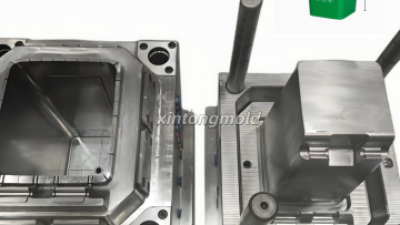
Advanced Plastic Dustbin Mould production begins with a clear understanding of material behaviour, product ergonomics, and regional manufacturing requirements. PlasticsEurope reported global plastics production of approximately 413.8 million tonnes in 2023, highlighting the scale and diversity of modern plastic processing. For dustbins, commonly used materials such as HDPE and polypropylene require moulds engineered for controlled shrinkage, impact resistance, smooth release, and consistent wall thickness.
A production-ready mould should be developed through design-for-manufacturing analysis, flow simulation, balanced gating, and carefully positioned cooling channels. These features help reduce warpage, sink marks, weld lines, and cycle-time variation across single- or multi-cavity systems. Ergonomic details—including reinforced rims, stable bases, integrated handles, and easy-clean surfaces—must be translated accurately into the tool design. High-quality mould steel, wear-resistant components, replaceable inserts, and reliable ejection systems also support long service life under demanding production schedules.
Sustainability is increasingly influencing dustbin design and mould engineering. The OECD’s *Global Plastics Outlook* estimates that plastic waste could almost triple by 2060 without stronger policy and production changes. Accordingly, moulds should accommodate recycled-content formulations where technically appropriate, while maintaining dimensional stability and surface quality. A global manufacturer can further improve competitiveness by adapting mould specifications to local machinery, resin availability, cooling conditions, automation levels, and quality standards, creating dependable tools that support efficient, repeatable bin production.
It forms the strap, locking head, and flexible tail from molten polymer. Small teeth must be sharp but free from flash. Strength and surface quality depend heavily on cavity accuracy.
A single-cavity mould is usually suitable for prototypes and limited production. It simplifies testing and maintenance. Output remains low, though.
Multi-cavity moulds produce many ties during one injection cycle. They reduce labour per piece and improve production efficiency. Balanced filling is essential because uneven flow creates inconsistent teeth or warping.
A family mould produces different cable tie sizes in one tool. It can reduce equipment needs. However, different shapes may fill unevenly, so trial results deserve careful review.
Hot-runner systems can reduce runner waste and support efficient production. Cold-runner systems generally cost less and are easier to maintain. The better choice depends on volume, budget, and maintenance skills.
Hardened tool steel is common for cavity plates and cores. Stainless inserts help resist moisture and corrosion. Copper alloys may improve heat transfer around thin sections. Material selection still requires practical testing.
Nylon absorbs moisture from the surrounding air. Inadequate drying may cause bubbles, brittleness, or weak tooth engagement. Drying settings should match the resin and local humidity.
Technicians may polish drag areas, adjust vent depth, or change cooling flow. Long ties may warp when cooling is uneven. Small adjustments can affect many cavities, sometimes unexpectedly.
Buyers should review cavity dimensions, cycle time, ejection performance, and repeated-bending samples. They should also inspect maintenance access. Simulation helps, but production trials reveal problems calculations may miss.
Not always. Machine pressure, humidity, resin batches, and operator settings can change results. A mould successful in one factory may need new settings elsewhere. That assumption deserves challenge.
This guide explains the fundamentals of Cable Tie Mould design, including how mould structure, cavity layout, cooling systems, and injection principles influence production efficiency and product consistency. It introduces the main design classifications and presents ten common mould types suited to different cable tie sizes, locking structures, materials, production volumes, and application environments. Readers will also learn how single-cavity, multi-cavity, interchangeable, high-speed, and customized designs can support diverse manufacturing requirements.
The article further examines key construction materials, surface treatments, durability features, and maintenance considerations. For global buyers, it provides practical criteria for evaluating mould precision, service life, cycle performance, quality control, and total operating value. It also discusses the importance of international standards, documentation, customization capability, communication, delivery reliability, and supplier support. By combining technical knowledge with purchasing guidance, the article helps buyers select a Cable Tie Mould that balances performance, compatibility, efficiency, and long-term production needs.