Leave Your Message
Choosing a Glass Bottle Storage Box Mold isn’t just about picking a box that matches your bottle. There’s a bit more to it—like making sure the mold can support the weight of the container, keep fragile glass safe, and produce consistent results. Even a few millimeters can make a difference in how the bottles sit in each compartment. So, fitting perfectly really comes first.
Start by noting down the bottle’s height, body diameter, the shape of the neck, and how much space you’ll need for dividers. Then think about what you’re actually gonna use these boxes for—are they going to be stacked in a warehouse, displayed in a store, or transported multiple times? Each scenario puts different demands on things like wall thickness, corner strength, and ease of handling. A tight fit can help keep bottles from jostling around, but if it’s too snug, loading could get tricky, or it might even cause damage. It’s all about paying attention to the little details.
You also want to give some thought to material choice and how the mold is designed. Ask questions like: How does the plastic behave as it cools? Will it shrink? And how easily will the finished box come out of the mold? It’s smart to ask for drawings, double-check those dimensions, and see a sample under real-world conditions. A quick test with filled bottles can catch issues like weak dividers or awkward handles before you commit to a big order. Don’t just rely on the look—test everything.
Remember, there’s no one-size-fits-all mold out there. Even a good design might need tweaks after the first sample. It’s totally normal and worth keeping in mind. This guide covers the practical stuff you need to check—like measuring bottles, designing cavities, ensuring tooling quality, and how to talk with your supplier—to make sure you end up with a storage box that fits well, protects what’s inside, and can be produced reliably over and over again.
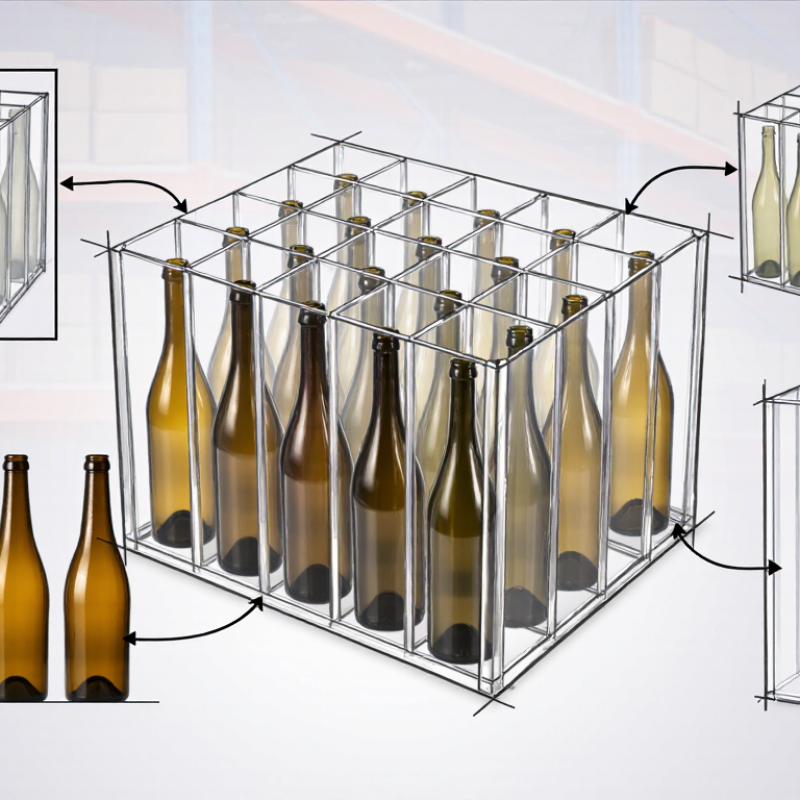
Before designing a Storage Box Mold, define the bottle it must hold. Measure the bottle at its widest point, including the cap, shoulders, and any raised details. Record its total height and the space needed to lift it out without scraping the lid. Small differences matter. A glass bottle can vary slightly between production batches, so avoid designing a snug cavity around one sample alone. Check several bottles, and use the largest measurements as a starting point.
Then specify how the box will be used. Will it hold one bottle or several? A single bottle may need a shaped insert; a multi-bottle box needs dividers that prevent glass from knocking together. Note the box’s outer dimensions, stacking needs, opening style, and expected handling. If it will travel, test cushioning with a filled box and inspect corners, dividers, and closures after movement. This step is often rushed. It shouldn’t be. Decide whether the mold forms the box itself or an inner tray, and confirm the material’s thickness and flexibility. Leave practical clearance for easy packing, but not so much that the bottle shifts. Measure twice. Then test a real prototype; drawings alone can miss an awkward grip or a lid that catches.
| Requirement | Bottle Specification or Working Example | Storage Box Design Implication | What to Confirm Before Making the Mold |
|---|---|---|---|
| Bottle type and capacity | Round glass bottle; nominal capacity 500 mL | Set the compartment layout and usable internal volume around the actual bottle, including its closure. | Confirm the final bottle drawing and whether the box must accommodate more than one bottle size. |
| Bottle envelope | Example body diameter: 68 mm; overall height with closure: 220 mm | For individual compartments, a starting cell size of about 74 × 74 mm and an internal height of about 232 mm allows handling clearance. | Measure the widest body, shoulder, base, and closure; include bottle dimensional variation and box removal clearance. |
| Bottle weight and fragility | A 500 mL glass bottle may weigh roughly 300–400 g empty; the filled weight depends on the contents. | Provide base support and separators that reduce bottle-to-bottle contact during handling and transport. | Use the actual filled weight and conduct handling or transport tests; do not rely on empty-bottle weight alone. |
| Number and arrangement of bottles | Working example: 6 bottles in a 3 × 2 arrangement | With 74 mm cell pitch, the compartment layout is approximately 222 × 148 mm before adding perimeter walls and clearances. | Confirm the pack count, orientation, loading method, and whether the bottles need separate removable dividers. |
| Box internal and external dimensions | Illustrative internal footprint: approximately 222 × 148 mm for the 3 × 2 layout; internal height: approximately 232 mm | External dimensions depend on wall thickness, dividers, lid design, and required stacking features. | Check the finished box against warehouse, shelf, pallet, and shipping-carton limits before fixing mold dimensions. |
| Box material and process | Example: reusable polypropylene (PP) box made by injection molding | Material choice affects stiffness, impact performance, shrinkage, and the mold’s cooling and ejection design. | Confirm the resin grade, operating temperature, reuse expectations, and compatibility with the intended manufacturing process. |
| Wall, base, and divider design | For an injection-molded PP box, a nominal wall thickness around 2–3 mm is a common starting point, subject to part geometry and resin. | Use consistent walls where practical; size the base and dividers for the loaded weight and expected handling. | Have the part designer and mold maker review stiffness, sink risk, warpage, and glass-contact points. |
| Draft and release from mold | Draft angle depends on depth, surface texture, resin, and part geometry; it must be designed into the molded walls and ribs. | Drafted walls and suitable ejection features help the box release from the mold without excessive force or distortion. | Agree draft angles, texture, parting line, and ejector locations with the mold maker during design review. |
| Dimensional tolerance and clearance | Bottle dimensions and molded-box dimensions both vary; the required clearance depends on the bottle and box manufacturing tolerances. | Allow enough clearance to load and remove bottles while limiting movement that could cause impact between glass surfaces. | Set critical dimensions and tolerances from production samples, and verify fit with maximum- and minimum-size bottles. |
| Lid, stacking, and handling | Requirements depend on whether the box is closed, stacked, carried, or used only as an open storage tray. | A lid, nesting features, stack stops, handles, or handholds may change the mold geometry and box height. | Confirm stack load, carrying method, lid retention, and whether empty boxes must nest for storage. |
| Prototype and validation | A dimensionally accurate prototype can help check fit before committing to production tooling. | Test loading, unloading, closure, stacking, and bottle movement using representative filled bottles. | Approve the final sample and inspection criteria before authorizing the production mold. |
Note: Dimensions above are illustrative starting values for a 500 mL round bottle and a six-bottle box. Final mold specifications should be based on the selected bottle’s production drawings, measured samples, material, and use conditions.
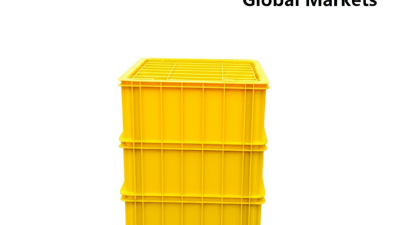
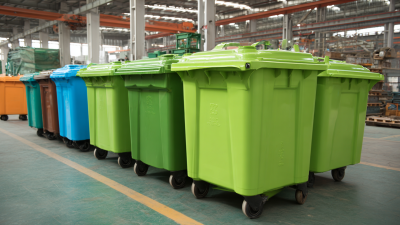
Closed plastic logistics containers, also known as solid-wall transport crates, help businesses protect goods through repeated handling and changing weather conditions. Their high-impact HDPE or PP construction, solid walls, and fitted lids shield contents from dust and moisture, while stackable shapes make better use of warehouse and vehicle space. This aligns with a key theme in reusable-packaging market analysis: durable transport packaging can support repeated-use logistics when collection, inspection, and return processes are in place.
The scale of packaging use underlines the opportunity. The U.S. Environmental Protection Agency’s *Advancing Sustainable Materials Management* report found that containers and packaging made up 28.1% of U.S. municipal solid waste by weight in 2018. Reusable transport containers can help businesses reduce reliance on single-trip packaging when they remain in service across multiple journeys. As a China-based manufacturer and supplier, our factory produces solid-wall crates designed for dependable handling and compatibility with automated systems. Their weather-resistant protection and efficient stacking suit warehouses, distribution centers, and other logistics operations seeking practical, long-lasting packaging.
Match the resin to the required stiffness, temperature range, and bottle load. Impact-resistant polypropylene is common, but it may not suit every design.
Hardened steel suits repeated production and long wear. Aluminum can speed prototypes and transfer heat quickly, but sliding parts may wear sooner. There is no universal winner.
Yes. A steel base with replaceable inserts in high-wear areas can balance durability and repair costs. The initial price may be higher.
Place cooling channels near thick corners, add suitable draft, and use ribs without creating heavy sections. Uneven walls can warp and misalign dividers.
Use a printed or machined sample to check bottle spacing, grip points, and divider height. A sample is useful, but it cannot replace molded-part testing.
Use the intended resin and load the box with filled bottles. Check flex, scuffing, and removal, especially around corners and divider roots. Small details matter.
A single-cavity aluminum mold may suit a small pilot run. High, repeat orders may justify a multi-cavity steel mold. Forecasts can be wrong.
Compare cost per acceptable box, including cycle time, scrap, maintenance, and design changes. Recheck volume estimates against actual orders before choosing cavity count.
Choosing the right Glass Bottle Storage Box Mold begins with a clear understanding of the bottle sizes, box capacity, stacking needs, and intended storage conditions. These requirements guide the mold’s material, construction, overall structure, and key dimensions. Careful planning helps ensure the finished box holds bottles securely, uses space efficiently, and can be produced consistently.
Next, match the manufacturing method and mold design to the expected production volume. Assess mold quality, compatibility with the chosen production process, and relevant safety considerations before committing. Compare the full costs, including upkeep and replacement needs, and consider the level of technical support available from the supplier. Balancing these factors can help you select a practical, durable mold that meets both production goals and storage requirements.