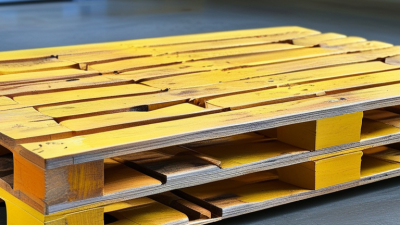
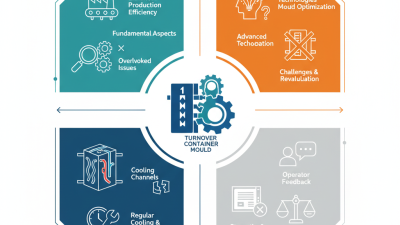
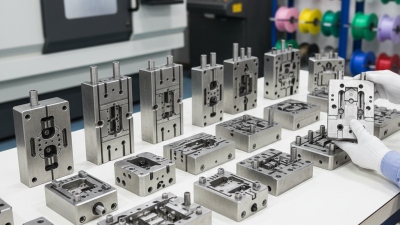
Picking the right Logistic Pallet Mould really starts with understanding what the pallet will actually go through in daily use. Will it be hauling heavy boxes, rolling through automated conveyor systems, or getting knocked around a busy warehouse? These little details actually influence the size, rib structure, choice of material, and how long the mold needs to last. Because honestly, something that seems perfect on a drawing can still end up with weak corners or uneven walls—small details matter way more than you might think.
One helpful viewpoint comes from Dr. David Kazmer, who’s known for his work in polymer processing. His main point? A mold isn’t just about matching the drawing — it’s about making sure it works with the resin, the machine, and the production goals. When you're shopping around, it’s good to compare things like the steel grade used, how the cooling lines are set up, gate design, and expected cycle times. And don’t forget to ask how the supplier verifies the consistency of parts—like weight and dimensions—over multiple runs. Be sure to request detailed specs, test reports, and maintenance tips—solid proof beats just a lot of promises.
Costs are definitely important, but watch out: the lowest bid might hide compromises in cooling efficiency, machining quality, or mold durability. Also, think about what injection molding machines you’ve got — a fancy mold that’s too big or too advanced won’t do any good if your equipment can’t handle it. No checklist is perfect, and even seasoned buyers can overlook issues like how easy it is to repair or tweak the design later. So, it’s worth taking a moment to think that over before giving the green light. Overall, a good Logistic Pallet Mould isn’t just about having the flashiest model—it needs to reliably produce consistent parts, be practical to maintain, and fit your production needs. Choosing the right one means finding a mold whose proven performance actually aligns with your pallets, your process, and the folks running it every day.
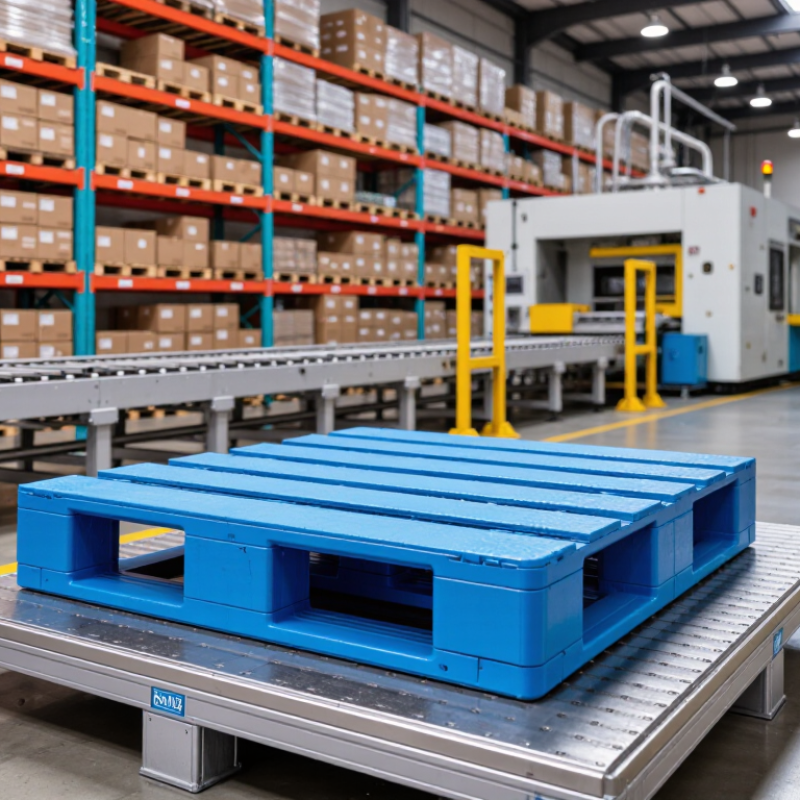
Define Static, Dynamic, and Racking Loads Using ISO 8611 Pallet Tests
A pallet may carry the same goods in very different ways: resting on a floor, moving on a forklift, or spanning warehouse rack beams. ISO 8611 tests help define these conditions and assess pallet performance.
Static load describes a stationary pallet supported evenly.
Dynamic load reflects handling, such as lifting a loaded pallet with a forklift.
Racking load applies when the pallet rests on beams, often with its center unsupported.
These are different stresses. A high rating in one condition does not guarantee strength in another.
For a Pallet Mould, test results should guide the deck layout, ribs, and support areas. A thin deck may save material, but it can flex under concentrated loads. Reinforcing every section is not automatically better; it may add weight without solving the actual failure point.
Real warehouses are less tidy than test rigs. Load placement, beam spacing, and handling can vary, so define test conditions carefully and compare like with like.
Use the relevant ISO 8611 procedures to evaluate the intended pallet design, then review how it performs under each load case. Small prototype changes can matter. A rib shifted slightly may improve stiffness, while a corner can still deform. That is worth questioning. Test the moulded pallet, not just the CAD model, and record the load, support arrangement, and observed damage.
Select ISO 6780 Footprints: 1200 × 800 or 1200 × 1000 mm
Choosing a logistic pallet mould starts with the footprint your supply chain can actually use. ISO 6780 includes both 1200 × 800 mm and 1200 × 1000 mm pallet sizes. The 1200 × 800 mm format is common in European distribution, while 1200 × 1000 mm is often used for broader loads and other established logistics networks. Neither size is automatically better.
Check the pallet against warehouse racking, conveyor widths, truck space, and handling equipment. A few centimetres can affect clearance or load stability. Small details matter. Confirm the required entry sides, load capacity, and stacking pattern with the people who handle the pallets daily. A drawing alone may not reveal a snag point under a forklift tine.
The mould must match the selected footprint and the intended pallet design, including deck layout, openings, and wall thickness. These choices influence material flow and cooling, so prototypes or production trials can expose problems before full-scale use. Measure twice. It is tempting to choose the more familiar size, but familiarity is not proof of fit. Compare actual site measurements and load requirements before committing to tooling.
Compare HDPE (0.94–0.97 g/cm³) and PP (0.90–0.91 g/cm³)
When choosing a Plastic Pallet Mould, compare resin density alongside the pallet’s working conditions. HDPE typically measures 0.94–0.97 g/cm³, while PP is usually 0.90–0.91 g/cm³. For equal material volume, PP generally produces a lighter part. That can matter when workers handle empty pallets or freight costs depend on weight. But density alone does not predict load capacity.
HDPE is often selected for impact resistance and performance in cooler environments. PP can offer useful stiffness and heat resistance, depending on its grade and formulation. Check the pallet’s rated load, impact exposure, temperature range, and surface design before choosing. Ask the mould supplier to confirm processing recommendations for the exact resin grade. Small changes in ribs, wall thickness, or recycled content can affect warpage and strength. Test a sample under realistic loads. It may reveal issues a datasheet misses.
I would not treat the density figures as a verdict. Resin grades vary, and additives can change performance. A lighter PP pallet may still need thicker sections, which can reduce its weight advantage. An HDPE design may suit rough handling, but it is not automatically the better option. Compare finished-part weight and test results, not just resin specifications. Real use can be less tidy than the spreadsheet.
Size Mold Cavities to Pallet Area and Injection-Press Clamping Force
How to Choose the Best Logistic Pallet Mould?
Choosing a Logistics Pallet Mould starts with the pallet’s projected area, not just its overall dimensions. Measure the deck, runners, and reinforcing ribs facing the mould opening. For multiple cavities, add the projected area of every cavity and the runner system. Small details matter.
Estimate clamping demand using the total projected area and expected cavity pressure. Check the resin’s processing data, then compare the estimate with the injection press’s available clamping force. Use the press manufacturer’s calculation method, since machine ratings and operating conditions can differ. Leave a practical safety margin; a mould running near the press limit may flash at the parting line or open slightly during filling.
Cavity layout affects both mould size and force requirements. More cavities can raise output, but they also increase total projected area and may require a larger press. Ask the mould designer and press technician to verify the figures together. I would not trust a tidy spreadsheet alone. Resin flow, wall thickness, and actual filling pressure can shift the result, so confirm assumptions with mould-flow analysis or a controlled trial. A little uncertainty is worth recording rather than hiding.
How to Choose the Best Logistic Pallet Mould? - Size Mold Cavities to Pallet Area and Injection-Press Clamping Force
| Pallet Footprint (mm) | Mold Cavities | Pallet Projected Area per Cavity (m²) | Estimated Total Projected Area* (m²) | Estimated Clamp Force** (Metric Tons) | Suggested Press Class for Initial Review (Metric Tons) |
| 600 × 400 | 1 | 0.240 | 0.247 | About 1,015 | 1,200 |
| 800 × 600 | 1 | 0.480 | 0.494 | About 2,030 | 2,500 |
| 1,200 × 800 | 1 | 0.960 | 0.989 | About 4,060 | 4,500 |
| 1,200 × 1,000 | 1 | 1.200 | 1.236 | About 5,075 | 5,500 |
| 1,100 × 1,100 | 1 | 1.210 | 1.246 | About 5,115 | 5,500 |
*Estimated total projected area includes a 3% allowance for runners. For multi-cavity layouts, add the projected areas of all cavities and runners. **Estimates use an assumed average cavity pressure of 35 MPa and a 15% reserve on calculated clamp force. These figures are for preliminary comparison only; confirm the required force using the resin, part geometry, actual projected area, mold layout, and press specifications.
Design Cooling and Ejection for Consistent Large-Part Molding
A logistic pallet mould must cool evenly across its broad deck and deep ribs. Uneven temperatures can cause warpage, sink marks, and difficult release. Put cooling channels near thick sections, while keeping spacing consistent around the perimeter and corners. Check flow balance, not just inlet temperature. Small details matter.
Plastics Technology’s injection-molding guidance puts cooling at roughly 70–80% of cycle time in many applications. Treat this as a practical benchmark, not a promise: pallet geometry, resin, and wall thickness change the result. Mold-flow analysis can identify hot spots, but production trials should confirm them. Record water temperature and flow at each circuit; a warm return line may reveal a restriction or imbalance.
Ejection needs equal care. Support the pallet beneath ribs and other stiff areas, then distribute ejector pins to avoid concentrated stress. For large parts, staged ejection or air assistance may reduce sticking, though either can leave marks if poorly placed. I would not assume a faster cycle is better. A few seconds saved can cost a pallet’s flatness. Check finished parts after cooling, stacking, and repeated cycles before finalizing the mould.
How to Choose the Best Logistic Pallet Mould?
Design Cooling and Ejection for Consistent Large-Part Molding
This illustrative cycle-time allocation highlights why cooling deserves close attention in large-part molding. Actual proportions vary with resin, pallet geometry, tooling, and process settings; validate them through mold trials.
Validate Dimensions and Load Performance Against ISO 8611 Tests
Choosing a logistic pallet mould starts with the finished pallet, not the tool drawing. Confirm length, width, deck spacing, entry openings, and corner radii against the handling equipment. A few millimetres can affect rack fit or fork access. Allow for material shrinkage, but verify the final dimensions on moulded samples.
ISO 8611 provides test methods for assessing Flat Pallet performance under specified conditions. Select the relevant tests for the intended load and handling pattern, then record support spacing, load placement, and conditioning. Measure deflection during loading, not just after unloading. Small changes in test setup matter. APallet Flat that performs well under one support arrangement may behave differently in another. Check both stiffness and load capacity; neither number tells the whole story.
Use test results to refine mould details, including ribs, wall thickness, and reinforcement around fork openings. Keep the sample material and moulding conditions consistent, or comparisons become unreliable. Ask the test laboratory to document the exact setup and applicable ISO 8611 procedures. There is a practical limitation: a prototype may not capture every variation in production. Review early results, then test representative Moulded Pallets before approving the design.
Conclusion
Choosing the right Logistic Pallet Mould starts with understanding how the pallet will be used. Static, dynamic, and racking loads represent different conditions, so mold design should be guided by the relevant ISO 8611 pallet tests. The required footprint also matters: ISO 6780 dimensions such as 1200 × 800 mm and 1200 × 1000 mm suit different handling and storage needs. Material selection influences the result too. HDPE, typically around 0.94–0.97 g/cm³, and PP, around 0.90–0.91 g/cm³, have different density and processing characteristics that should be considered alongside the pallet’s performance requirements.
For reliable production, match the number and size of mold cavities to the pallet’s area and the injection press’s clamping force. Plan cooling and ejection carefully to help control temperature, limit distortion, and achieve consistent large-part molding. Before production, check that the finished pallet’s dimensions and load performance meet the intended specifications through appropriate ISO 8611 testing. These steps help align the mold, material, equipment, and end-use requirements.