China has really become a go-to place for sourcing Water Tank Molds, you know? A lot of suppliers there support everything from plastic storage tanks and agricultural containers to industrial vessels and even household water systems. Many factories actually do it all—mold design, CNC machining, polishing, assembly, and testing—under one roof, which makes things a lot easier.
But here’s the thing: size isn’t everything when it comes to quality. You want an experienced supplier who truly understands the ins and outs of rotational, blow, or injection molding. They should know exactly how the mold’s structure fits the tank’s capacity, wall thickness, material, and the production cycle. Engineers usually check things like cooling performance, the seams or parting lines, venting, draft angles, and how smoothly the parts come out—these little details really matter because they can affect leakage, surface finish, and even costs down the line.
And hey, don’t just take their word for it. Ask for proof! Good manufacturers should be able to give you detailed 3D drawings, steel specs, inspection reports, and even samples for testing. It’s important to understand what kind of steel they’re using—be it aluminum, P20 steel, stainless steel, or whatever fits your needs. Plus, clear communication is key. Whether it’s changing the tank size, adding threaded outlets, handles, ribs, or reinforced corners, make sure everything’s nailed down. Some suppliers also offer helpful advice on maintenance or replacement parts after you receive your molds.
Of course, no supplier’s perfect. A slick website doesn’t mean much if you can’t back it up with real evidence of their work. Even a really good Water Tank Mold might need tweaks after that first trial run. Before you sign any deal, it’s worth checking out their tolerances, delivery timelines, warranties, and experience with exports. Visiting the factory, watching videos, or doing independent quality checks can really help you feel more confident about your choice.
This guide highlights some of the top Water Tank Mold manufacturers and suppliers from China, but at the end of the day, the best pick really depends on what you need—your application, budget, how much you’re producing, and your technical specs. Just remember: do your homework, ask the right questions, and don’t rush it.
China’s Water Tank Mold Market: 500–20,000 L Rotomolding Capacity
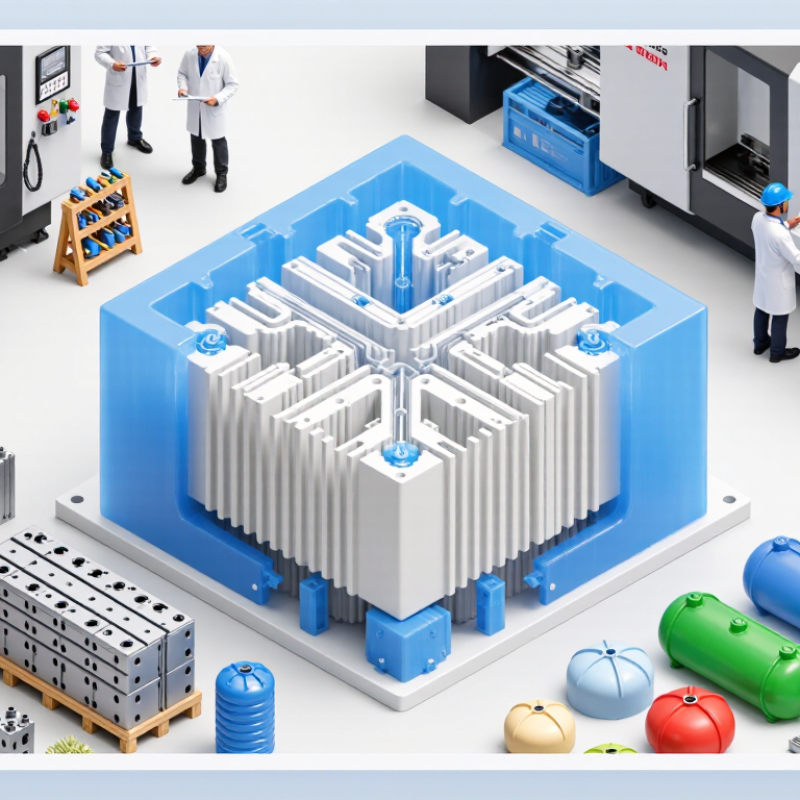
China’s water tank mold market is expanding around practical storage volumes, from 500 to 20,000 liters. This range supports farms, construction sites, factories, and emergency water systems. Rotomolding suppliers commonly build molds for cylindrical, horizontal, and vertical tanks. According to Grand View Research’s 2024 rotational molding analysis, the global market is expected to grow steadily through 2030. Demand is linked to durable plastic products, lower tooling waste, and flexible production.
For buyers, mold performance matters more than advertised capacity. A 5,000-liter mold needs controlled wall thickness, reliable cooling, and stable demolding. Larger 10,000–20,000-liter tools also require stronger frames and careful transport planning. Technical teams should check aluminum quality, vent design, mold splitting, and cycle-time records. The Association of Rotational Molders identifies temperature control and powder distribution as key quality factors. These details affect tank weight, leakage resistance, and long-term shape stability. Yet, capacity claims are not always measured consistently. That deserves scrutiny.
Tips: Request sample thickness maps and recent production data. Confirm whether the quoted volume is nominal or usable. Ask for mold drawings before paying a deposit. Inspect welds, hinges, and lifting points. A factory visit can reveal more than a polished catalog. One overlooked issue is after-sales repair support. Even a well-designed mold may need adjustment after repeated cycles.
Water Tank Mold Types: Rotational, Blow, Injection, and Composite Designs
Water Tank Mould selection depends on tank size, material, production volume, and wall thickness. Each design behaves differently on the factory floor.
Rotational moulds suit large polyethylene tanks with hollow, seamless walls. Heated powder coats the cavity during controlled rotation. Cooling must remain even. Otherwise, warping or thin corners may appear. Blow moulds support fast production for smaller tanks and narrow openings. Their parison control affects thickness around handles, ribs, and outlets. A poorly adjusted parison can create weak zones. That mistake is easy to miss without section testing.
Injection moulds deliver repeatable dimensions for compact tanks, lids, and fittings. They need strong clamping, balanced runners, and careful cooling channels. Composite moulds combine reinforced materials with metal inserts or structural layers. They can reduce weight, but repair planning becomes more important. In practical supplier evaluations, engineers should inspect cavity polish, vent placement, temperature records, and trial samples. Ask for measured wall-thickness data, not only photographs. Check whether the mould tolerates repeated heating and cooling cycles. Some suppliers promise short delivery times, yet rushed machining may leave sharp transitions or uneven parting lines. I have found that the first trial often reveals more than a polished specification sheet. Small adjustments may still be necessary.
Key Mold Materials: P20 Steel, Aluminum, and 304 Stainless Steel
Choosing the right material is central to reliable water Tank Mouldproduction. A Tank Mould must handle pressure, repeated cycles, heat, and surface wear. P20 steel remains a practical choice for medium and large moulds. Its balanced hardness supports stable machining and reasonable service life. It also accepts polishing and texturing with consistent results. However, P20 can require careful rust prevention during storage and production.
Aluminum offers a lighter alternative. Its low weight makes mould changes faster and reduces handling demands on the factory floor. It also transfers heat efficiently, which can shorten cooling cycles. This benefit matters when production volume is high. Yet aluminum is softer than steel. Deep textures, sharp edges, and frequent impacts may reduce its working life. Mould designers should consider the tank’s geometry before selecting it.
304 stainless steel suits applications requiring strong corrosion resistance. It performs well in humid workshops and supports clean, durable mould surfaces. Its hardness and machining behavior can increase manufacturing time, though. That extra effort may be justified for demanding production conditions. No material is perfect. A specification can look right and still fail after poor cooling design or careless maintenance. Experienced suppliers should review resin type, tank size, expected output, surface finish, and repair plans before recommending P20 steel, aluminum, or 304 stainless steel. Small details matter.
China Top Water Tank Mold Manufacturers and Suppliers - Key Mold Materials: P20 Steel, Aluminum, and 304 Stainless Steel
| Mold Material | Representative Grade | Typical Hardness | Approx. Thermal Conductivity | Corrosion Resistance | Machinability | Typical Water Tank Mold Use | Main Advantages | Key Limitations |
| P20 Mold Steel | Pre-hardened tool steel, commonly supplied as P20 or equivalent grades | Approximately 28–36 HRC, depending on supply condition | Approximately 29–34 W/m·K at room temperature | Moderate; requires rust protection and controlled storage | Good for a hardened mold steel; suitable for CNC machining, drilling, and polishing | Large injection molds, structural mold plates, cavity inserts, and molds requiring durability | Good wear resistance, dimensional stability, strength, and broad availability | Heavier than aluminum; slower heat transfer; may require surface treatment in humid environments |
| Aluminum | 6061-T6 or 7075-T6 commonly used for lightweight tooling and prototypes | 6061-T6: approximately 90–100 HB; 7075-T6: approximately 135–150 HB | Approximately 130–170 W/m·K, depending on alloy and temper | Good in normal atmospheric conditions; lower resistance than 304 stainless steel in aggressive environments | Very good; fast CNC cutting and comparatively low tool wear | Prototype molds, short-to-medium production runs, lightweight molds, and applications requiring rapid cooling | Low weight, excellent thermal conductivity, fast machining, and shorter cooling cycles | Lower wear resistance and stiffness than steel; surface damage can occur under high clamping or abrasive conditions |
| 304 Stainless Steel | AISI 304 / EN 1.4301 austenitic stainless steel | Usually approximately 70–90 HRB when annealed; hardness increases through cold work | Approximately 14–16 W/m·K at room temperature | Very good resistance to moisture and many common atmospheric contaminants | Moderate; prone to work hardening and requires suitable cutting parameters | Corrosion-sensitive components, hygienic tooling sections, water-contact fixtures, and special inserts | Excellent corrosion resistance, clean surface appearance, and good resistance to humid operating conditions | High material cost, low thermal conductivity, and lower mold-making efficiency than aluminum |
Technical note: The listed hardness and thermal-conductivity values are typical reference ranges. Actual performance depends on the exact grade, heat treatment, mold design, surface finish, cooling layout, manufacturing process, and operating conditions.
| Supplier Evaluation Dimension | Recommended Verification Items | Why It Matters for Water Tank Molds |
| Material Traceability | Material grade, heat number, mill certificate, and hardness report | Confirms that the mold steel or aluminum matches the design and durability requirements |
| Dimensional Accuracy | CMM inspection, cavity measurement records, and parting-line tolerance data | Helps control tank wall thickness, sealing surfaces, thread alignment, and assembly fit |
| Surface Finish | Specified roughness values, polishing standard, texture sample, and visual inspection criteria | Affects demolding, external appearance, cleaning, and the risk of surface defects |
| Cooling and Heating Design | Channel layout, flow testing, temperature uniformity, and leak testing | Improves cycle consistency and reduces warpage, sink marks, and uneven solidification |
| Maintenance Support | Spare-part availability, repair procedures, coating options, and technical documentation | Reduces downtime and extends mold service life during continuous production |
Rotomolding Parameters: 250–350°C Oven Temperatures and 30–90-Minute Cycles
China Top Water Tank Mold Manufacturers and Suppliers
Rotomolding parameters strongly influence water-tank strength, surface quality, and production cost. Typical oven temperatures range from 250–350°C, with complete cycles lasting 30–90 minutes. These figures describe the oven environment, not the polymer’s actual internal temperature. That difference matters.
A 2024 Fortune Business Insights report valued the global rotational molding market at approximately USD 8.86 billion in 2023. It also forecast continued growth through 2032, supported by demand for large, lightweight plastic tanks. This market data does not replace process validation. Each mold needs testing.
Experienced manufacturers monitor mold temperature, air temperature, rotation speed, and cooling time together. A data logger can reveal cold corners or overheated ribs. For polyethylene tanks, insufficient heating may leave powdery inner surfaces and weak weld lines. Excessive heating can create bubbles, discoloration, or unnecessary material degradation. Small changes matter.
A 30-minute cycle may suit a thin tank, while a thick-walled design may require 90 minutes or more. Mold steel thickness also changes heat transfer. So does the oven load. The stated 250–350°C range is useful, but not universal. It needs adjustment.
Trial production should include wall-thickness checks, leak testing, impact testing, and visual inspection. ASTM D1998 provides relevant guidance for rotationally molded polyethylene tanks. One overlooked issue remains cooling. Fast cooling can distort the tank, although slow cooling may reduce output. Real production is rarely perfect.
Top Chinese Manufacturers: Certifications, Production Capacity, and Export Reach
China’s Moulded Water Tanks mold sector is supported by strong manufacturing infrastructure and broad export networks. WTO statistics report that China supplied about 14% of global merchandise exports in 2023. This scale helps mold makers source steel, machining services, and standardized components quickly. However, export volume does not prove technical consistency.
Qualified suppliers should show valid ISO 9001 quality-management certification and clear audit records. ISO 14001 is also useful for reviewing energy, waste, and coolant controls. For export projects, ask for steel certificates, dimensional inspection reports, and traceable revision files. Good factories can provide 3D mold designs, cooling-channel layouts, trial-shot records, and corrective-action reports. Details matter.
Production capacity needs practical evidence. A capable workshop should list CNC sizes, maximum mold weight, injection-machine compatibility, and monthly trial capacity. Large tank molds may require lifting systems above ten tonnes. That changes scheduling. UNIDO’s industrial statistics continue to identify China as a leading global manufacturing base, but capacity claims still need verification. Factory visits, sample inspections, and video-recorded mold trials reduce uncertainty. Certification helps. It is not proof of perfect output. Some suppliers still rely on manual polishing, causing uneven wall thickness or difficult demolding. Buyers should compare cycle-time data, cooling performance, export packaging, and after-sales response before signing a contract.
China Top Water Tank Mold Manufacturers and Suppliers
Certifications, Production Capacity, and Export Reach
The chart shows the publication year of major ISO management-system standards commonly reviewed during water tank mold supplier qualification. These dates describe the standards themselves, not certifications held by any specific company. Production capacity and export reach should be verified through factory audits, documented monthly output, shipping records, and destination-market compliance documents.
Supplier Evaluation: Mold Accuracy, Wall Thickness, Lead Time, and MOQ
Selecting China’s top water tank mold manufacturers requires measurable evidence, not polished catalog images. ISO 20457 defines tolerances for injection-molded plastic parts, but it does not set one universal tolerance for every tank. Ask suppliers to state cavity dimensions, steel grade, and inspection method. A coordinate-measuring machine report should compare the mold against approved CAD data. Check the neck and outlet areas closely. Small errors there can cause leakage or difficult assembly.
Wall thickness needs equal attention. The PlasticsEurope Plastics—The Facts 2023 report places global plastics production at about 400 million tonnes in 2022, showing the scale of production pressure and material efficiency demands. For a water tank, request a Moldflow or equivalent filling analysis. Review thickness maps around corners, ribs, and the base. A thin patch may look acceptable on one sample, then fail after cooling. Ask for at least three trial parts from different cycles. Do not trust one perfect sample.
Lead time should be divided into design approval, steel preparation, machining, testing, and corrections. A clear Gantt chart is useful. It is not proof. Confirm the date for the first trial and the date for final acceptance. MOQ should include the expected production quantity, resin grade, and color requirements. For a Water Bottle Cap Mould, a supplier may quote a low MOQ but exclude testing or spare inserts. That detail matters. ISO 2859-1 sampling guidance can support acceptance checks, although buyers must define their own defect limits. I would also record every dimensional deviation; this simple habit often exposes optimistic promises.
Purchasing Guide: Comparing Costs, Quality Control, Warranty, and After-Sales Service
When comparing water tank mold manufacturers in China, start with the complete cost, not only the quotation. Ask whether the price includes mold steel, cooling channels, trial production, packaging, and shipping preparation. A cheaper mold may require more polishing or frequent repairs later. That difference can erase the initial saving.
Quality control should be visible and measurable. Request steel certificates, dimensional inspection reports, and trial samples from the actual mold. Check wall thickness, corner formation, surface finish, and fitting accuracy. Experienced buyers also inspect machining records and process control methods. A factory should explain how it prevents warping and uneven cooling. Photos help, but they are not proof. Physical samples matter more.
Warranty terms need careful reading. Confirm the covered period, repair limits, excluded damage, and responsibility for transport. Ask how quickly spare parts can be made and who provides technical support after installation. A responsive service team can reduce production stoppage. However, some promises sound impressive but remain vague. I still distrust a warranty without written procedures. No checklist catches everything. Leave room for independent inspection, because even a well-made mold may need adjustment after real production begins.
Conclusion
China’s Water Tank Mold industry supports production volumes from 500 to 20,000 liters, serving agricultural, industrial, commercial, and domestic water storage needs. Manufacturers offer rotational, blow, injection, and composite mold designs, with material choices including P20 steel for durability, aluminum for lighter weight and efficient heat transfer, and 304 stainless steel for corrosion resistance. For rotational molding, typical oven temperatures range from 250°C to 350°C, while cycle times generally last 30 to 90 minutes depending on tank size, material, and wall thickness.
When selecting a Chinese supplier, buyers should assess mold accuracy, uniform wall-thickness control, production capacity, certifications, export experience, lead time, and minimum order quantity. A reliable Water Tank Mold partner should also provide clear cost comparisons, strict quality inspections, practical warranty terms, technical support, and responsive after-sales service. Evaluating these factors together helps buyers balance investment, performance, delivery reliability, and long-term production value.