You know, China’s cap and closure industry is really booming right now, thanks to the growing demand from sectors like beverages, food, pharma, and personal care packaging. According to Grand View Research, the global market for plastic caps and closures hit around USD 55.15 billion in 2023, and it’s expected to keep expanding through 2030. So, if you're looking at opportunities, this is pretty clear: reliable Cap Mold manufacturers and suppliers in China are definitely in a good spot.
But hey, a Cap Mold isn’t just some steel tool you buy off the shelf. It’s actually quite complex — it handles everything from thread precision and sealing performance to cycle time and waste management. John Bozzelli, a well-known injection-molding expert, even calls the mold “the heart of the injection molding process,” and honestly, he’s onto something. If cooling isn’t done right, you’ll end up with uneven shrinkage. If the cavity isn’t balanced, the caps you produce may not be consistent. And those tiny defects? They might seem minor, but in high-volume production, they can cost you a lot.
That’s why having an experienced China Top Cap Mold Manufacturer and Supplier is crucial. They should be upfront about these risks and explain things clearly. When you evaluate them, don’t just look at the steel or the fancy pictures — check their technical details like mold steel quality, cavity design, hot runner system, cooling channels, tolerances, and how easily maintenance can be done. And make sure they provide trial reports that cover cycle times, dimensional accuracy, and material performance. Factory visits or audits are just as important, along with how they support you after the sale.
A shiny catalog with pretty images doesn’t tell you everything, so don’t fall for that alone. The manufacturer needs to back up their claims with real, measurable evidence — like customer references, inspection reports, and honest communication about your project. Of course, nobody’s perfect; changes in materials, differences in machinery, or even operator habits can impact the final result. A good supplier knows these things and keeps testing and improving.
In this article, we’ll take a closer look at China’s Cap Mold manufacturing skills, their quality control methods, customization options, and how to pick the right supplier. We’re focusing on the real evidence, not just broad promises — because that’s what really matters when you’re making a decision.
China’s Cap Mold Industry: 24–144 Cavities and Cycle-Time Benchmarks
China Top Cap Mold Manufacturer and Supplier
China’s Cap Mold Industry: 24–144 Cavities and Cycle-Time Benchmarks
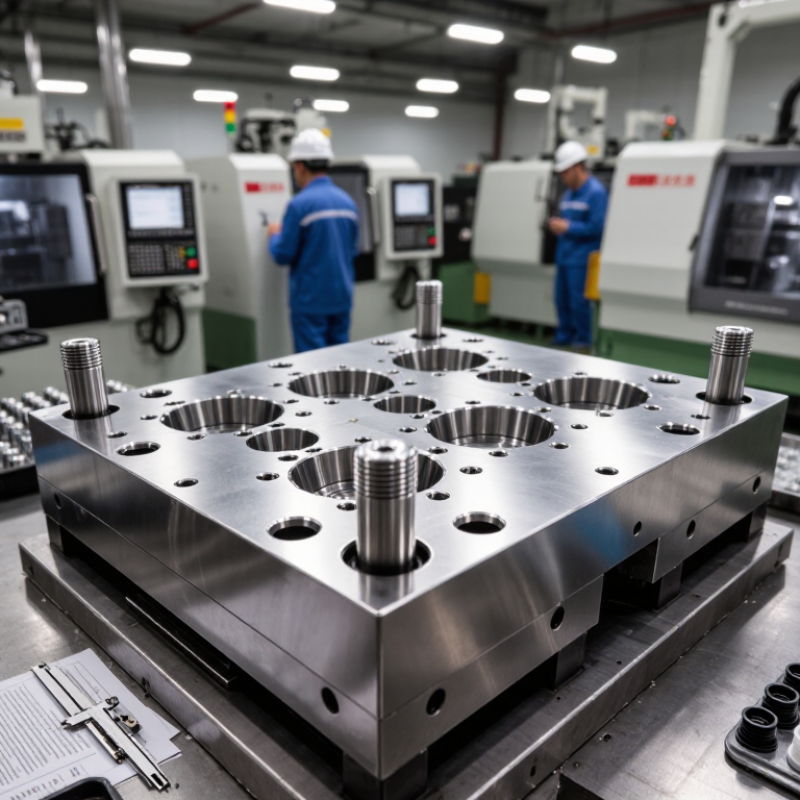
China’s cap mold industry now supports cavity counts from 24 to 144. These configurations serve different output targets, machine sizes, and quality expectations. A 24-cavity mold usually offers easier maintenance and lower initial risk. A 72- or 96-cavity system can raise productivity while keeping tooling complexity manageable. High-output plants may select 128 or 144 cavities for standard HDPE or PP caps.
Cycle time depends on more than cavity count. For common water-cap designs, 24–48 cavities may run around 12–18 seconds. A 72–96 cavity mold may reach 8–14 seconds under stable conditions. Well-optimized 128–144 cavity systems can approach 6–10 seconds. These figures are practical benchmarks, not guarantees. Resin grade, cap weight, cooling-channel design, machine response, and demolding speed can change the result.
Small details matter. Balanced hot runners reduce filling variation between cavities. Hardened inserts support repeated production, while accessible cooling lines simplify service work. Mold trials should check cap weight, thread accuracy, sealing performance, and cavity-to-cavity consistency. A short quoted cycle can be misleading. Faster production may increase warpage or leakage if cooling is insufficient. This is where careful testing matters. Some projects also overestimate 144-cavity capacity before confirming the injection unit and automation system. A slower, stable cycle may deliver more usable caps than an unstable record time.
Cap Mold Design: 28 mm PCO 1881 and 38 mm Neck-Finish Standards
A Bottle Cap Mold for 28 mm PCO 1881 closures requires careful control of thread geometry, sealing surfaces, and tamper-evident features. Small dimensional errors can cause uneven torque or leakage during filling and transport. Our mold design process begins with verified neck-finish drawings and production requirements. We review cavity balance, cooling channels, steel selection, and ejection movement before machining begins.
The 28 mm PCO 1881 finish is widely used for lightweight beverage packaging. Its shorter neck design demands accurate thread alignment and stable parting-line control. A few microns matter. We check critical areas with coordinate measuring equipment, thread gauges, and sample closures. Trial molding then reveals practical issues that drawings may miss, such as gate marks, flash, or difficult demolding. Sometimes our first assumption is wrong.
For 38 mm neck-finish standards, the design must reflect the container application, closure height, sealing method, and required opening force. Not every 38 mm finish follows identical details, so copying an old mold can create avoidable risk. We confirm the neck dimensions, thread profile, support ring, and tamper-evident connection with the customer’s technical team. A reliable cap mold supplier also evaluates cycle time and maintenance access. Replaceable inserts, balanced cooling, and clear inspection points can protect production stability over many molding cycles.
Tool Steel Selection: H13 Inserts Hardened to 46–52 HRC
China Top Cap Mold Manufacturer and Supplier
H13 tool steel is a practical choice for high-cycle Plastic Cap Mold inserts. Its chromium-molybdenum composition supports thermal fatigue resistance during repeated injection cycles. When hardened to 46–52 HRC, the insert balances surface durability with useful toughness. Heat control matters.
The 2024 Grand View Research analysis of injection-molded plastics identifies packaging as a major demand sector, driven by high-volume production. This pressure makes insert stability essential. In a cap mold, a small gate edge, thread detail, or cooling imbalance can create thousands of defective closures. Our tooling checks therefore include hardness mapping, polishing inspection, and trial sampling after heat treatment.
Hardness alone is not enough. H13 hardened near 52 HRC may resist wear better, but excessive hardness can reduce impact tolerance during machining or service. Near 46 HRC, toughness improves, yet thread surfaces may wear sooner. That choice is not automatic. The 2023 ASM Handbook guidance on hot-work tool steels also emphasizes controlled heat treatment and tempering, not only the final hardness value. A practical supplier should record furnace temperature, soak time, quenching conditions, and tempering results. We have seen attractive laboratory readings fail when documentation was incomplete. That is an uncomfortable lesson. It still matters.
H13 Insert Hardness Range for Cap Molds
H13 tool-steel inserts for cap molds are specified at 46–52 HRC. The 49 HRC value represents the mathematical midpoint of this target range and is shown for reference.
Mold Precision: ISO 20457 Tolerances and ±0.01 mm Machining Targets
China Top Cap Mold Manufacturer and Supplier
Cap mold precision starts with the drawing, not the CNC machine. ISO 20457 defines general tolerances for injection-molded parts, considering dimensions, materials, and tolerance grades. It does not make ±0.01 mm a universal requirement. That distinction matters. A cap thread, sealing land, and gate area may need different controls. The Plastics Industry Association reported that injection molding remains one of the largest U.S. plastics processing methods by value. This demand increases pressure for repeatable mold performance.
Tight machining targets require measurable process discipline. A qualified supplier should record steel temperature, tool wear, coordinate-measuring results, and cavity-to-cavity variation. A ±0.01 mm target may apply to selected mold features, not every surface. Cutting too aggressively can leave burrs around a 28 mm cap thread. Polishing can also remove several microns and change the fit. Small details matter.
The ISO 20457 approach encourages realistic tolerance allocation. Designers should separate mold tolerance, molded-part shrinkage, and assembly clearance. Industry 4.0 quality studies, including reports from the International Federation of Robotics, show growing use of automated inspection and process monitoring. Still, automation does not replace judgment. Our review of precision projects often finds one weak assumption: perfect room-temperature dimensions are expected after production heat cycles. That assumption needs testing. A reliable China mold manufacturer should provide inspection records, material certificates, trial samples, and corrective-action evidence before shipment.
Supplier Evaluation: 2–5 Million-Cycle Mold Life and Warranty Evidence
China Top Cap Mold Manufacturer and Supplier
Choosing a cap mold supplier requires evidence, not attractive promises. A claimed 2–5 million-cycle mold life should include test records, maintenance history, and clear operating conditions. Ask which steel grade, heat treatment, cavity count, and cycle speed were used. These details affect wear around threads, cooling channels, and sealing surfaces. Base Cap Molding performance should be verified through sample production, dimensional reports, and inspection photographs. Numbers need context. Promises are easy.
Tips: Request a signed warranty covering the mold’s expected cycle range, critical dimensions, and repair response time. Check whether the warranty includes normal wear, replacement inserts, and polishing work. Some warranties exclude nearly every practical failure, so read the exceptions carefully. A short video of a running mold helps, but it cannot replace production records.
Reliable suppliers explain how they measured the 2–5 million cycles. They should define acceptable flash, wall-thickness variation, thread damage, and downtime limits. Ask for references from comparable cap designs, without relying only on testimonials. An experienced engineering team can also provide preventive-maintenance intervals and spare-part recommendations. Still, no mold lasts forever. Resin choice, machine alignment, cooling quality, and operator habits change results. A supplier may provide strong evidence yet miss a specific application. That possibility deserves discussion before purchase.
Closure Quality Control: Torque, Leakage, and 100% Vision Inspection
China Top Cap Mold Manufacturer and Supplier
A reliable Plastic Cap Mould supports consistent closure performance from the first trial to daily production. Torque control is checked with calibrated digital testers. Application torque must secure the cap without damaging the container neck. Removal torque also matters. Too little torque may cause loosening. Too much torque can distort threads or make opening difficult. Operators should record results beside the production batch for traceability.
Leakage testing adds practical evidence. Filled containers can face pressure, vibration, and temperature changes during handling. Test stations check for air loss, liquid seepage, and incomplete sealing. Meanwhile, 100% vision inspection examines every closure. Cameras identify missing tamper bands, flash, short shots, thread damage, and deformation. Automatic rejection helps prevent unstable parts from reaching packing. No system is perfect. Lens contamination and poor lighting still require human review.
Tips: Keep torque tools calibrated. Clean vision lenses every shift. Check sealing surfaces after mold maintenance. Retest after material or temperature changes. A small sample can reveal a larger process problem.
FAQS
Request test records, maintenance logs, and operating conditions. Check steel grade, heat treatment, cavity count, and cycle speed. Promises are easy.
Inspect threads, cooling channels, sealing surfaces, and replacement inserts. Small damage can create flash, leaks, or difficult opening.
It should cover cycle expectations, critical dimensions, repair response time, normal wear, inserts, and polishing. Read every exclusion carefully.
No. A video shows current operation, not millions of completed cycles. Production records provide stronger evidence.
Review sample parts, dimensional reports, and inspection photographs. Check thread fit, wall thickness, sealing surfaces, and visible flash.
Use calibrated digital torque testers. Record application and removal torque beside each production batch. Too little torque may loosen the cap.
Filled containers face pressure, vibration, and temperature changes. Testing can detect air loss, liquid seepage, and incomplete sealing.
Cameras inspect every closure for missing tamper bands, flash, short shots, thread damage, and deformation. Automatic rejection removes unstable parts.
Not completely. Dirty lenses and weak lighting can hide defects. Clean lenses every shift and review unusual rejects manually.
Resin choice, machine alignment, cooling quality, maintenance, and operator habits all matter. A strong supplier may still miss your application.
Conclusion
China’s Cap Mold industry supports a wide range of packaging applications, from 24- to 144-cavity systems, with performance measured through cycle time, output stability, and consistent part quality. Effective mold design must match common neck-finish standards, including 28 mm PCO 1881 and 38 mm formats, while maintaining accurate threads, sealing surfaces, and demolding performance. H13 steel inserts hardened to approximately 46–52 HRC can provide a strong balance of wear resistance, toughness, and serviceability.
Reliable manufacturing also depends on precision machining and controlled assembly. ISO 20457-based tolerances, combined with machining targets of ±0.01 mm where appropriate, help ensure cavity uniformity and interchangeable components. When evaluating a supplier, buyers should request evidence of a projected 2–5 million-cycle service life, documented warranty terms, and maintenance support. Final closure quality should be verified through torque testing, leakage checks, dimensional inspection, and 100% vision inspection to identify defects before shipment.